
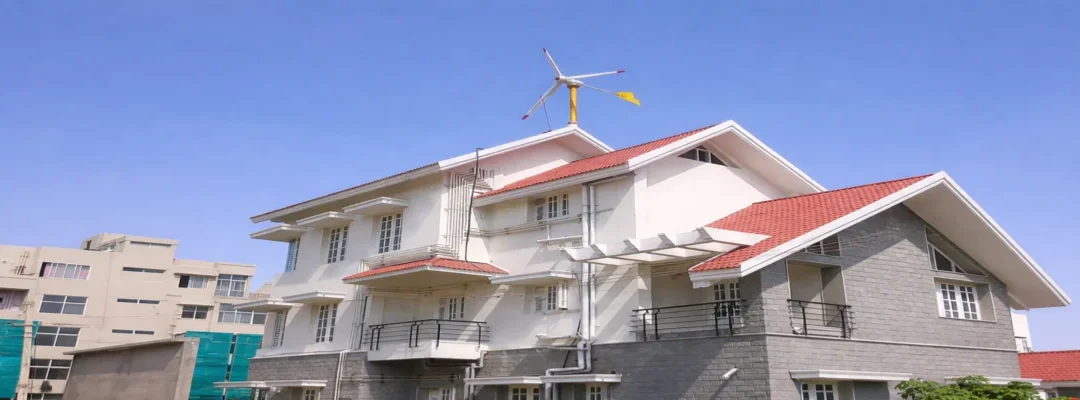
Installing a home wind turbine is an excellent way to generate clean energy, reduce electricity bills, and increase energy independence. However, homeowners often face a critical decision: should the turbine be roof-mounted or Ground-mounted?
Choosing the right type affects energy production, safety, maintenance, and return on investment (ROI). In this guide, we compare roof-mounted and tower-mounted wind turbines, highlighting the pros, cons, and real-world applications to help you make the best choice.
Understanding Roof‑Mounted and Ground‑Mounted Wind Turbines
Before comparing, let’s define the two types:
- Roof-Mounted Turbines: Installed directly on the roof of your home or building. They are smaller, more compact, and designed for urban or suburban properties with limited space.
- Ground-Mounted Turbines: Installed on a freestanding tower, often 20–50 feet above the ground. They are ideal for open areas with unobstructed wind and higher average wind speeds.
Key Differences Between Roof-Mounted and Ground-Mounted Turbines
| Feature | Roof-Mounted Turbines | Ground-Mounted Turbines |
|---|---|---|
| Height & Wind Access | Limited by roof height; may experience turbulence | Higher elevation; accesses stronger, more consistent winds |
| Energy Output | Moderate; suitable for small-scale energy needs | High; more efficient and consistent power generation |
| Installation Cost | Lower initial cost | Higher cost due to tower construction and permits |
| Maintenance Access | Easier; can be accessed from roof | More challenging; may require professional service |
| Noise & Vibration | Can transmit noise to living spaces | Typically isolated from home; less interior vibration |
| Urban Suitability | Ideal for rooftops in cities/suburbs | Best for open land or rural properties |
Advantages of Roof-Mounted Wind Turbines
- Space-Efficient: Perfect for homeowners with limited land or no open yard.
- Lower Initial Cost: Smaller turbines are cheaper to purchase and install.
- Urban-Friendly: Can be integrated into existing rooftops without major land use.
- Easier Maintenance Access: Roof-mounted units are more accessible for minor inspections.
Limitations:
- Lower energy output due to turbulence caused by buildings or trees.
- Increased noise and vibrations can affect living spaces.
- Not ideal for areas with low average wind speeds.
Advantages of Tower-Mounted Wind Turbines
- Higher Energy Production: Tower height allows access to stronger, more consistent winds.
- Better ROI: Higher energy output translates to faster payback periods.
- Reduced Turbulence: Freestanding towers avoid interference from nearby structures.
- Safer Noise Levels: Sound and vibrations are further from living areas.
Limitations:
- Higher upfront cost due to tower materials, construction, and permits.
- Requires sufficient open space and compliance with local zoning regulations.
- Maintenance may require professional assistance due to height.
Factors to Consider When Choosing Between Roof vs Ground Mount
1. Available Space
- Roof-mounted: Ideal for urban or suburban homes with limited yard space.
- Tower-mounted: Requires open land or adequate clearance from structures.
2. Wind Conditions
- Roof-mounted turbines are more affected by turbulence from nearby buildings or trees.
- Tower-mounted turbines are more efficient in steady, high winds.
3. Energy Needs
- Small turbines (1–5 kW) on rooftops are suitable for partial energy supply.
- Tower-mounted turbines (5–20 kW) can provide a significant portion of household energy needs.
4. Budget and ROI
- Roof-mounted turbines have lower initial costs but lower energy output.
- Tower-mounted turbines have higher upfront costs but better long-term ROI due to higher energy production.
5. Maintenance Considerations
- Roof-mounted turbines are easier to access for minor maintenance.
- Tower-mounted turbines may require professionals for inspections, lubrication, and blade servicing.
FAQs About Roof vs Tower-Mounted Wind Turbines
1. Can I install a roof-mounted turbine in an urban area?
Yes, roof-mounted turbines are ideal for cities or suburban homes with limited land.
2. Do tower-mounted turbines generate more energy than roof-mounted?
Yes, because towers access stronger, less turbulent wind at higher elevations.
3. Which type has lower maintenance costs?
Roof-mounted turbines are easier to access, but tower-mounted turbines are more durable and efficient.
4. Are there zoning restrictions for tower-mounted turbines?
Yes, most municipalities have height, setback, and permitting requirements for tower installations.
5. Which option gives better ROI?
Tower-mounted turbines generally provide better long-term ROI due to higher energy production, despite higher upfront costs.