
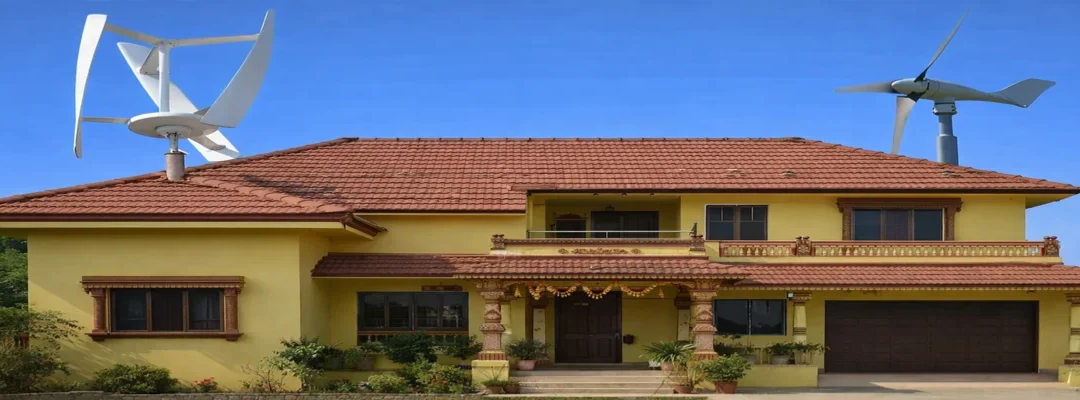
Harnessing wind energy at home is becoming increasingly popular as homeowners look for sustainable ways to reduce electricity bills and carbon footprints. One of the first decisions when considering a home wind turbine is choosing between horizontal axis wind turbines (HAWT) and vertical axis wind turbines (VAWT). Both types have unique advantages and are suitable for different situations. This guide will help you make an informed choice.
What Are Horizontal and Vertical Axis Wind Turbines?
- Horizontal Axis Wind Turbines (HAWT):
These are the traditional wind turbines most people recognize, with a propeller-like rotor mounted on a horizontal axis. They need to face into the wind to function efficiently. - Vertical Axis Wind Turbines (VAWT):
VAWTs have blades that rotate around a vertical axis. They can capture wind from any direction, making them more flexible in turbulent or shifting wind conditions.
Key Differences Between HAWT and VAWT
| Feature | Horizontal Axis (HAWT) | Vertical Axis (VAWT) |
|---|---|---|
| Efficiency | High, especially in steady winds | Moderate, less efficient in low winds |
| Space Requirement | Needs open space, usually mounted on a tall tower | Compact, can be mounted near buildings |
| Noise | Can be noisier due to high-speed blades | Generally quieter |
| Maintenance | Requires regular checks at height | Easier to maintain at ground level |
| Durability | Proven long-term performance | Newer designs may vary in lifespan |
| Cost | Higher initial cost | Generally lower initial cost |
Pros and Cons of Horizontal Axis Wind Turbines
Pros:
- High energy output in steady winds
- Well-established technology with proven reliability
- Wide availability of models
Cons:
- Requires significant tower height and open space
- Can be noisy and visually intrusive
- Maintenance can be challenging at height
Pros and Cons of Vertical Axis Wind Turbines
Pros:
- Captures wind from any direction
- Compact design suitable for urban and suburban areas
- Easier maintenance at ground level
Cons:
- Lower efficiency in low-wind areas
- Less energy output compared to HAWTs in high winds
- Limited product options and shorter track record
Which Type Is Best for Your Home?
Choosing between HAWT and VAWT depends on several factors:
- Available Space: If you have a large backyard with open wind exposure, HAWTs are more efficient. For small or urban properties, VAWTs are better suited.
- Wind Conditions: Steady, strong winds favor HAWTs. Areas with turbulent or changing wind directions benefit from VAWTs.
- Budget: HAWTs have a higher upfront cost but may provide better ROI long-term. VAWTs cost less initially but may generate less energy.
- Maintenance Considerations: If climbing towers for maintenance is a concern, VAWTs are safer and easier to service.
FAQs About Home Wind Turbines
1. Can I install a wind turbine on my rooftop?
Yes, small VAWTs or specialized roof-mounted HAWTs can be installed, but you must consider wind exposure, structural support, and noise.
2. How much energy can a home wind turbine generate?
It depends on turbine size, wind speed, and location. Small residential turbines typically generate 400–2,000 kWh per year.
3. Do I need batteries for my wind turbine?
Batteries are optional but recommended if you want to store excess energy and reduce reliance on the grid.
4. Are vertical axis turbines noisy?
No, VAWTs are generally quieter than traditional HAWTs because of their slower blade rotation and lower height.
5. How often should I maintain my wind turbine?
Basic inspections are recommended every 6 months, with full maintenance annually.