
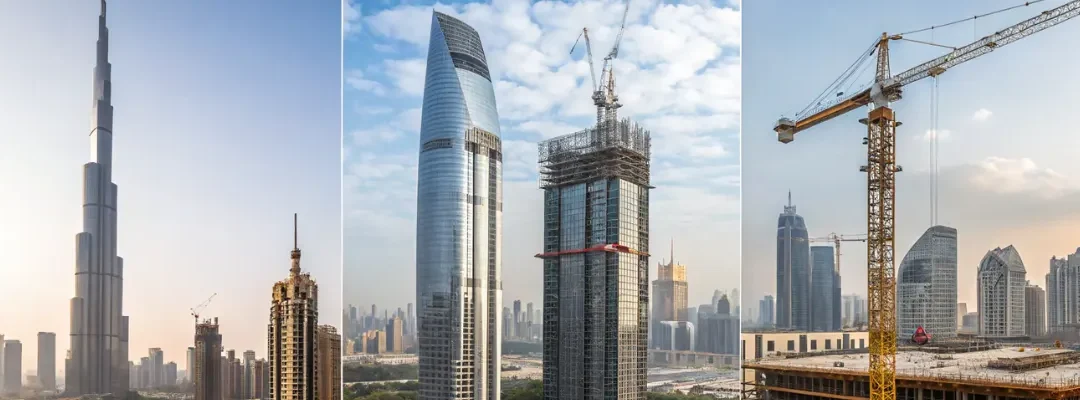
Every building, from a simple house to a skyscraper, relies on a structural system that ensures safety, stability, and durability. The type of structure chosen depends on factors like purpose, height, load requirements, soil conditions, and budget.
In this guide, we’ll explore the main types of building structures in construction, their characteristics, and where each is best used.
1. Load-Bearing Structure
One of the oldest forms of construction, load-bearing structures transfer the entire load of the building through walls to the foundation.
Features:
- Walls are thick and carry both dead and live loads
- Floors and roof rest on the walls
- No separate framing system
Used in:
- Low-rise buildings, traditional houses, and small commercial structures
Pros: Cost-effective for small buildings, simple construction
Cons: Thick walls reduce floor space, not suitable for high-rise
2. Frame Structure
Frame structures are the most common system today, especially for modern multi-story buildings. Loads are carried by a skeleton frame of beams and columns.
Features:
- Walls are non-load-bearing (used as partitions)
- Strong foundation to carry vertical loads
- Can be made of steel, RCC (reinforced cement concrete), or timber
Used in:
- High-rise buildings, office towers, commercial complexes
Pros: Flexible design, supports taller structures
Cons: Requires skilled labor, higher cost than load-bearing
3. Truss Structure
A truss is a framework of triangular units made of straight members. It distributes loads efficiently and spans long distances.
Features:
- Lightweight but strong
- Can be prefabricated
- Reduces use of heavy beams
Used in:
- Bridges, stadiums, warehouses, railway stations
Pros: Economical for large spans, easy prefabrication
Cons: Complex design and joint detailing required
4. Shell Structure
Shell structures are thin, curved surfaces that carry loads by compression and tension.
Features:
- Minimal thickness but very strong
- Aesthetic and futuristic designs
- Requires precise engineering
Used in:
- Domes, silos, water tanks, auditoriums, airports
Pros: Lightweight yet strong, unique designs
Cons: Expensive formwork and skilled design needed
5. Pre-Engineered Building (PEB) Structures
A modern method where most components are prefabricated in factories and assembled on-site.
Features:
- Standardized sections manufactured off-site
- Quick assembly and reduced construction time
- High precision with low waste
Used in:
- Industrial sheds, warehouses, shopping malls, large halls
Pros: Faster construction, cost-effective for large spaces
Cons: Limited flexibility in design changes once manufactured
6. Composite Structure
Composite structures combine two or more materials (like steel + concrete) to maximize strength and efficiency.
Features:
- Steel provides tensile strength
- Concrete provides compressive strength
- Economical and durable
Used in:
- Skyscrapers, bridges, towers, and high-load structures
Pros: Strong and efficient, versatile
Cons: Requires careful detailing and skilled construction
7. Tensile Structure
Tensile structures use fabric or membrane materials stretched over cables or supports.
Features:
- Lightweight and flexible
- Can cover large spans without heavy materials
- Modern and aesthetic designs
Used in:
- Stadium roofs, exhibition centers, outdoor canopies
Pros: Lightweight, visually striking
Cons: Limited durability compared to concrete/steel
Comparison Table: Types of Building Structures
| Structure Type | Best For | Pros | Cons |
|---|---|---|---|
| Load-Bearing | Low-rise houses | Simple, cost-effective | Thick walls, limited height |
| Frame Structure | High-rise, offices | Flexible, tall structures | Expensive, needs skilled labor |
| Truss Structure | Bridges, warehouses | Lightweight, economical spans | Complex joints |
| Shell Structure | Domes, airports | Aesthetic, strong with less material | Costly formwork |
| Pre-Engineered (PEB) | Warehouses, malls | Fast construction, precise | Limited customization |
| Composite Structure | Skyscrapers, bridges | Strong, efficient | Complex detailing |
| Tensile Structure | Stadiums, canopies | Lightweight, modern look | Lower lifespan |
FAQs
Q: Which structure type is best for residential houses?
A: For low-rise homes, load-bearing or simple RCC frame structures are most common.
Q: Are PEB structures durable?
A: Yes, when maintained well, PEBs can last 30–50 years.
Q: Why use composite structures?
A: They combine the best properties of steel and concrete, making them ideal for tall and heavy-load buildings.