
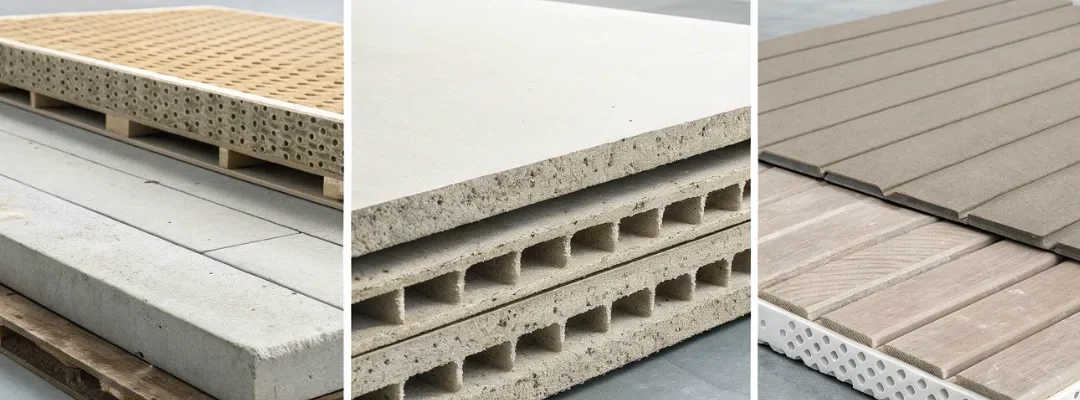
In modern construction, slabs form the essential horizontal structural elements—they serve as floors, ceilings, and even roofs. Choosing the right type of slab impacts a building’s strength, load distribution, insulation, and cost.
In this guide, you’ll learn about the different types of concrete slabs used in construction, their characteristics, and where each is most effectively used.
What Is a Slab in Construction?
A slab is a flat, horizontal surface made of reinforced concrete that provides structural support to buildings. Slabs distribute dead loads, live loads, and dynamic loads to beams and columns.
They are usually 100–500 mm thick and may be cast in place or prefabricated, depending on design and site requirements.
Main Types of Slabs in Construction
1. One-Way Slab
- Load is carried in one direction (supported on two opposite sides)
- Ratio of longer to shorter span > 2
Used in:
- Corridors, simple residential rooms, and pavements
2. Two-Way Slab
- Load is distributed in two directions (supported on all four sides)
- Ratio of longer to shorter span < 2
Used in:
- Multi-story buildings, flat slab systems, commercial floors
3. Flat Slab
- No beams between the column and slab
- Directly supported on columns (may have drop panels)
Benefits:
- Faster construction, better aesthetics, more headroom
Used in:
- Hotels, malls, parking garages, office buildings
4. Hollow Core Slab (Precast)
- Precast slab with longitudinal voids to reduce weight and material
Benefits:
- Lightweight, excellent for sound insulation, faster installation
Used in:
- High-rise residential, industrial buildings, modular construction
5. Ribbed Slab (Waffle Slab)
- Consists of ribs running underneath in two directions
Benefits:
- Handles heavier loads with less concrete, reduces weight
Used in:
- Commercial buildings, industrial warehouses
6. Cantilever Slab
- A slab that extends beyond its support without beams underneath
Used in:
- Balconies, canopies, terraces
7. Sunken Slab
- A slab with a lowered portion for plumbing in toilets or bathrooms
Used in:
- Wet areas of buildings (bathrooms, utility areas)
8. Composite Slab
- Made using a steel deck and reinforced concrete
Used in:
- Steel buildings, commercial multi-level buildings
9. Ground Slab (Slab-on-Grade)
- Concrete slab laid directly on the ground
Used in:
- Garages, warehouses, single-story homes (especially in warm climates)
10. Post-Tensioned Slab
- Reinforced with steel tendons that are tensioned after the concrete cures
Benefits:
- Handles long spans, reduces slab thickness
Used in:
- Parking decks, bridges, high-rise buildings
Comparison Table: Slab Types and Their Applications
| Type | Span | Best For | Special Feature |
|---|---|---|---|
| One-Way Slab | Short | Small rooms, pavements | Simple and economical |
| Two-Way Slab | Medium | Residential/commercial floors | Balanced load distribution |
| Flat Slab | Medium to Large | Offices, malls | No beams, aesthetic finish |
| Ribbed/Waffle Slab | Long | Warehouses, commercial buildings | Lightweight but strong |
| Hollow Core Slab | Long | Precast buildings, high-rise | Prefabricated, efficient |
| Cantilever Slab | Short Extension | Balconies, canopies | Projects beyond supports |
| Sunken Slab | NA | Bathrooms, wet areas | Allows concealed plumbing |
| Post-Tensioned Slab | Long | Parking structures, bridges | High tensile strength |
Factors to Consider When Choosing a Slab
| Factor | Impact |
|---|---|
| Building load | Heavier loads require stronger slab systems |
| Span requirements | Longer spans may need post-tensioning or waffle slabs |
| Construction speed | Precast options reduce on-site work |
| Aesthetics | Flat slabs offer beamless ceiling designs |
| Plumbing requirements | Sunken slabs are ideal for wet areas |
| Budget constraints | One-way slabs are cost-effective |
FAQs
Q: What’s the most commonly used slab in residential buildings?
A: The two-way slab is most common due to its structural efficiency and ability to span medium-sized rooms.
Q: Is flat slab better than conventional slab?
A: Flat slabs offer faster construction and better aesthetics but may require thicker slabs and column heads for load-bearing.
Q: Can I use a hollow core slab in my house?
A: Yes, especially in modular or precast construction for faster installation and reduced structural weight.