
Wind Energy for Homes
Eka Synergy Projects delivers wind turbine for homes solutions in India with a site-first approach. We match the turbine and configuration to your wind conditions, load needs, and backup/hybrid plan, while ensuring safe mounting and reliable electrical integration from planning through commissioning.
Why Wind Energy Is a Smart Choice for Homes?
Wind Energy for Homes is a practical renewable option for properties with sufficient and unobstructed airflow. Unlike conventional electricity sources, a Residential wind power generator produces clean energy without fuel dependency or emissions.
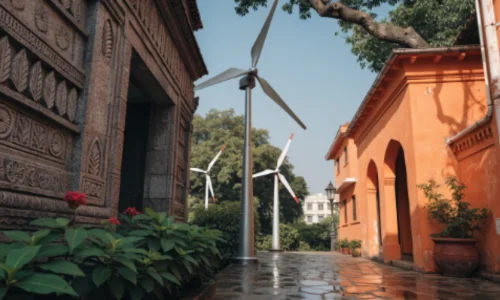
- Support selected household loads
- Reduce reliance on grid electricity
- Improve energy continuity during windy conditions
- Complement solar energy systems
Benefits of Wind energy solution for homes
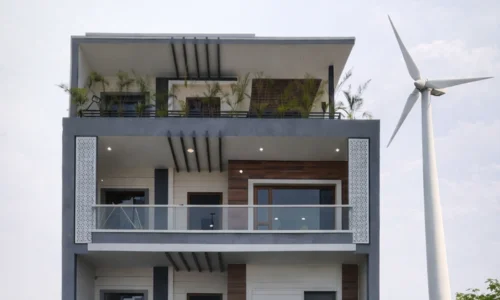
A well-engineered Domestic Windmill System offers both environmental and operational benefits.
Reduced grid dependence for essential circuits
Renewable energy support for battery charging
Enhanced reliability during windy weather
Long operational lifespan
Lower carbon footprint
Ideal for open residential plots, villas, and farmhouses
Effective hybrid integration with solar
For properties with proper wind exposure, windmills for houses can significantly improve daily energy reliability and long-term sustainability.
Types of Home Wind Turbines
Modern Domestic Wind Mills for residential properties are available in two primary configurations.
Vertical Axis Wind Turbines
- Compact residential properties
- Controlled rooftop installations
- Urban or semi-urban hybrid systems
Horizontal Axis Wind Turbines
- Farmhouses
- Independent villas
- Large open residential plots
- Tower-mounted installations
Home Wind Turbine Setup Options
At ekasynergyproject, every Wind Turbine for Home project is designed based on intended power usage and available infrastructure.
On-Grid Configuration
This setup connects the wind system to the existing electrical network. It allows homeowners to utilize renewable generation while remaining connected to utility supply.
Off-Grid Configuration
An Off-grid wind turbine for home uses battery storage and operates independently of the grid. This configuration is ideal for remote areas or properties with unstable power supply.
Off-grid setups are commonly implemented as part of a Domestic Wind Power Plant designed for energy independence.
Hybrid Solar + Wind Configuration
Hybrid systems combine wind and solar generation for improved balance across different weather conditions. This configuration is often the most practical long-term Wind energy solution for homes, especially where energy continuity is a priority.
VAWT System Capacities and Recommended Usage
- 1 kW – Essential backup and light loads
- 2 kW – Moderate residential usage
- 3 kW – Mid-level household support
- 5 kW – Larger homes and hybrid systems
Estimated Cost of Installing a Wind Energy Solution for Homes
The cost of a Wind Turbine for Home Use varies depending on:
Turbine capacity
Mounting structure or tower height
Electrical equipment and protection systems
Battery storage (for off-grid setups)
Installation complexity
Hybrid integration requirements
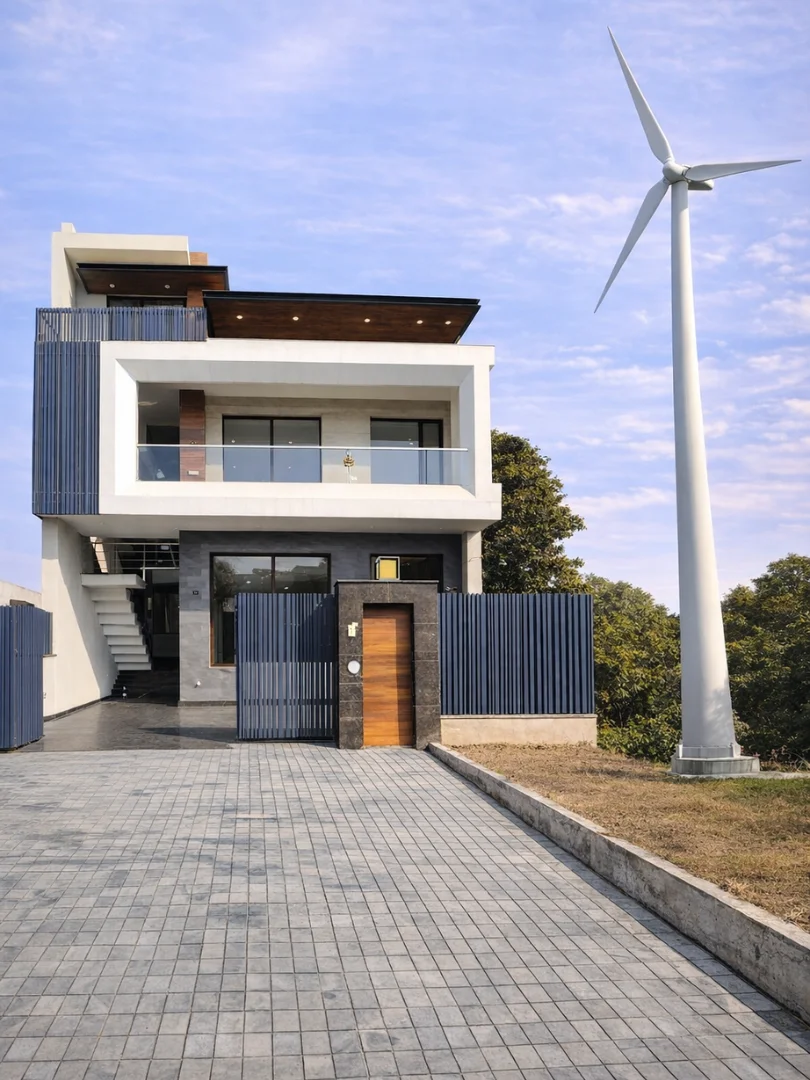
Why Choose Us for Your Wind Energy Solutions?
We delivers engineering-driven renewable solutions with a focus on realistic performance and long-term usability.

Site-Based Assessment
Every Wind energy solution for homes begins with evaluating wind exposure, structural feasibility, and energy demand.
Customized System Design
We design Residential wind energy systems based on real consumption patterns and backup goals.
Technical Expertise
Our team ensures proper integration of turbines, inverters, and batteries for safe and efficient operation.
Safety-First Implementation
Mounting stability, vibration control, and electrical protection are core priorities.
Long-Term Support
We provide post-installation guidance and service assistance for all Home Wind Turbines we support. Our solutions are suitable for independent houses, villas, farmhouses, and open residential plots where wind conditions are favorable.
Common Questions About Windmill System for Homes
1. How much power can a Wind Turbine for Home generate?
Power output depends on wind speed and system capacity. A properly sized Residential wind power generator installed in a good wind location can support essential loads or a significant portion of household consumption.
2. Is a Rooftop wind turbine for home effective in cities?
It depends on building height and airflow conditions. Dense urban areas may not always provide sufficient wind exposure for efficient operation.
3. What is the difference between a small wind turbine and a Domestic Wind Power Plant?
A small wind turbine usually supports limited circuits or battery charging. A Domestic Wind Power Plant is a more comprehensive system designed to serve larger portions of residential energy demand.
4. Can windmills for houses work with solar systems?
Yes. Hybrid systems combining wind and solar provide more balanced and reliable energy generation throughout the year.
5. What size wind turbine is suitable for a home?
DOE explains that to make a significant contribution for typical home usage, a 5–15 kW turbine may be needed depending on wind speed.
6. Can I use an off-grid wind turbine for home backup?
Yes. Off-grid setups support batteries and essential loads when designed correctly with controller, inverter, and battery sizing.
7. How do I estimate real output before buying?
NREL recommends adjusting for obstacles and turbulence, then applying wind distribution and the turbine’s performance data to estimate realistic energy production.
8. Are household wind turbines safe?
They are safe when installed and maintained correctly. IEC 61400-2 covers safety and engineering integrity requirements for small wind turbines.
9. Can a small wind turbine run my full home?
Usually it supports part of your usage unless the turbine and wind resource are large enough. NREL/DOE examples show output is strongly wind-dependent.