When embarking on the journey of building a house, selecting the right cement is paramount. Cement serves as the backbone of construction, providing the strength, durability, and stability necessary for safe and long-lasting structures. Among the various types of cement available, Ordinary Portland Cement (OPC) and Portland Pozzolana Cement (PPC) stand out as the most commonly used options. Each type possesses unique advantages and disadvantages, making them suitable for different construction needs. This comprehensive guide will help you understand whether to opt for OPC, known for its early strength, or PPC, which offers enhanced durability and environmental benefits.
Understanding Cement and Its Role in Construction
Cement is a fine powdery substance that acts as a binding material when mixed with water. It is essential in concrete and mortar, holding together sand, gravel, and other aggregates to form robust structures. With over 15 years of hands-on experience in the construction industry, EKA Synergy Projects recognizes how the right choice of cement can significantly impact the longevity and safety of a building. Our team is dedicated to empowering you with the knowledge needed to make informed decisions for your construction projects.
Types of Cement Used in Construction
- Ordinary Portland Cement (OPC)
- Portland Pozzolana Cement (PPC)
- Rapid Hardening Cement
- Sulphate Resistant Cement
- White Cement
- Low Heat Cement
Among these, OPC and PPC are the most preferred for residential construction.
What is OPC (Ordinary Portland Cement)?
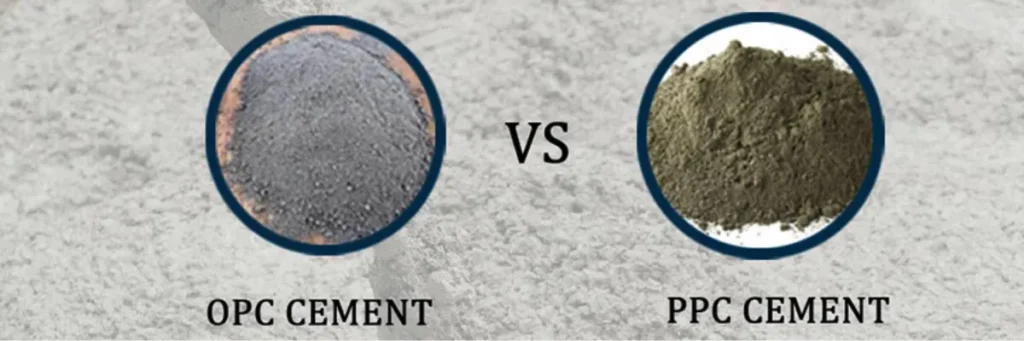
Definition & Composition: Ordinary Portland Cement (OPC) is composed of a mixture of clinker (95%) and gypsum (5%). It is renowned for its high early strength and is widely used in various construction applications, including high-rise buildings and bridges.
Grades of OPC:
- OPC 33 Grade – Suitable for non-structural work.
- OPC 43 Grade – Ideal for plastering and flooring.
- OPC 53 Grade – Best for reinforced cement concrete (RCC) structures and high-strength applications.
Best Used For:
- High-rise buildings
- Bridges and heavy-load structures
- Projects with tight timelines requiring quick setting
What is PPC (Portland Pozzolana Cement)?
Definition & Composition: Portland Pozzolana Cement (PPC) incorporates pozzolanic materials (15-35%), such as fly ash, along with clinker and gypsum. This innovative composition enhances its durability and environmental benefits, making it an excellent choice for sustainable construction practices.
Properties of PPC:
- More durable in aggressive environments
- Lower heat of hydration, reducing the risk of cracking
- Environmentally friendly due to the use of industrial by-products
Best Used For:
- Residential houses
- Plastering and masonry
- Moisture-exposed structures like bathrooms and basements
OPC vs PPC Cement: Key Differences
| Feature | OPC Cement | PPC Cement |
|---|---|---|
| Composition | Clinker + Gypsum | Clinker + Gypsum + Fly Ash |
| Strength | High early strength | Gradual strength gain |
| Durability | Less resistant to chemicals | More durable, resists sulphates and moisture |
| Workability | Less workable | More workable, smoother finish |
| Environmental Impact | Higher CO₂ emissions | Lower CO₂ emissions |
| Cost | Slightly higher | More cost-effective |
| Best For | Load-bearing structures | Residential, long-term use |
Advantages and Disadvantages of OPC and PPC Cement
OPC Cement
Advantages:
- High early strength for quick construction, ideal for urgent projects.
- Suitable for structural components requiring immediate load-bearing capacity.
Disadvantages:
- Higher heat of hydration can lead to cracking in certain conditions
- Less eco-friendly due to higher carbon emissions
PPC Cement
Advantages:
- Enhanced durability and resistance to environmental factors, ideal for long-term projects.
- Reduces surface cracking and has a lower carbon footprint, aligning with sustainable building practices.
- More cost-effective for long-term projects due to lower maintenance requirements.
Disadvantages:
- Slower strength development may not suit urgent projects.
- Requires longer curing time, potentially extending the overall project timeline
Choosing the Right Cement for House Construction
Use OPC When:
- Fast setting and early strength are critical.
- The construction timeline is short.
- Heavy structural loads are involved.
Use PPC When:
- Durability and cost-effectiveness are priorities.
- The construction site is in a coastal or humid area.
- A smoother finish is desired for plastering.
Best Practice: Consider using OPC for foundations and structural elements where immediate strength is required, and PPC for walls and finishing to ensure longevity and durability.
How to Identify High-Quality Cement
- Packaging & Brand:
- Purchase from reputable brands like UltraTech, ACC, and Ambuja, known for their quality and reliability.
- Check the manufacturing date; it should be within the last three months to ensure freshness.
- On-Site Tests:
- Color: Should be greyish-green.
- Feel: Smooth texture, not gritty.
- Float: Should sink in water.
- Setting: Begins within 30-45 minutes after mixing.
- Storage Tips:
- Keep cement dry, away from walls and off the ground to prevent moisture absorption
- Use within 90 days for optimal performance.
Cement Brand Recommendations
| Type | Brand Suggestions |
| OPC | UltraTech, ACC, Ambuja |
| PPC | Shree Cement, Dalmia, UltraTech |
Cost and Environmental Comparison
| Factor | OPC | PPC |
| Price/Bag | ₹350–₹450 | ₹300–₹400 |
| CO₂ Emissions | Higher | Lower |
| Long-Term Cost | Higher maintenance | Lower maintenance |
Real-World Use Cases
- OPC in Mumbai High-Rise: In a recent project, we utilized OPC for a high-rise building in which required rapid construction. While the early strength facilitated a swift build, we encountered some cracking due to the high hydration heat. This experience underscored the importance of managing hydration in large-scale constructions.
- PPC in Chennai Villa: Conversely, in a villa project in Chennai, we opted for PPC. Although the build process was slower, the resulting structure demonstrated excellent resistance to weather and long-term durability. The use of PPC ensured that the home has withstood various environmental challenges over the years.